

Wisdom Teeth Removal
Third molar removal by a board-certified oral and maxillofacial surgeon, with sedation available, in the practice you already know.
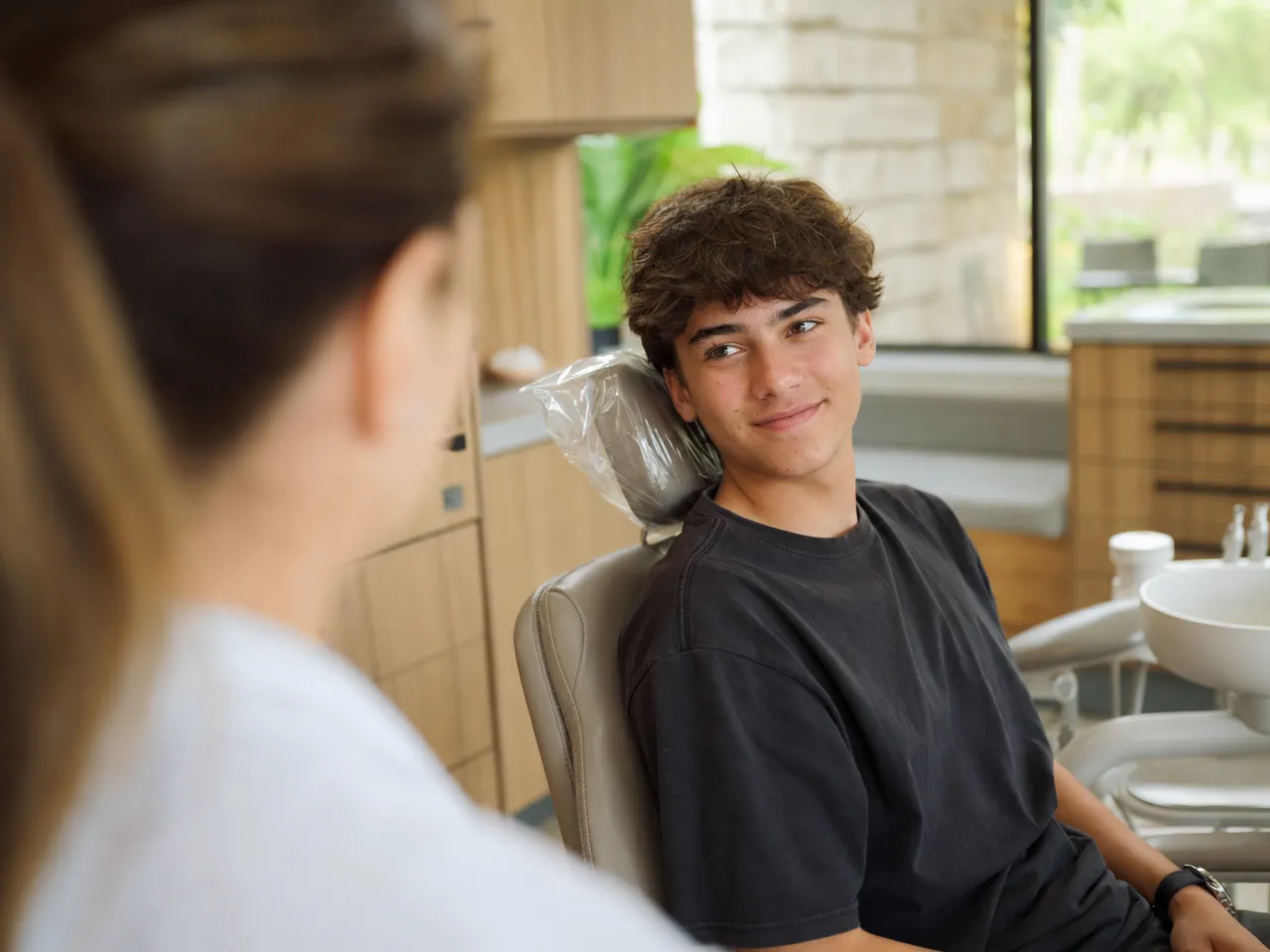
Wisdom teeth — the third molars — arrive in the late teens or early twenties, into a jaw that is usually already full. When there is not enough room, they come in at an angle, partially erupt, or stay trapped in the bone entirely.
Your surgeon
Wisdom tooth removal at Alamo Heights Dental is performed by Dr. Curtis D. Schmidt, DDS, our oral and maxillofacial surgeon. Dr. Schmidt is a retired U.S. Army Colonel who served 27 years, completed multiple combat tours, and retired as Chairman of Oral & Maxillofacial Surgery at Brooke Army Medical Center. He is board certified in Oral and Maxillofacial Surgery, in Cleft and Craniofacial Surgery, and by the National Dental Board of Anesthesia, and has been training surgical residents since 2009.
Most patients having wisdom teeth out are young, and it is often their first surgery. It is worth knowing who is doing it.
Why they are removed
- Impaction — the tooth is blocked by bone or by the molar in front of it
- Recurrent infection — a partially erupted tooth traps bacteria under a flap of gum that cannot be cleaned
- Decay — third molars are hard to reach with a brush, and decay there is often extensive by the time it is found
- Damage to the second molar — an angled wisdom tooth pressing into its neighbor can cause decay or bone loss on a tooth worth keeping
- Cysts — occasionally an impacted tooth develops a cyst in the surrounding bone
Not every wisdom tooth needs to come out. A tooth that is fully erupted, upright, functional, and cleanable can stay, and we will monitor it with x-rays rather than remove it on principle.
Anesthesia and comfort
Depending on the difficulty of the case and your preference, removal can be done with local anesthetic, with sedation, or with general anesthesia. Dr. Schmidt’s anesthesia board certification means those options are available in-house and managed by the surgeon performing the procedure.
We will go through the options, what you will remember, and what you need to arrange — including a driver if you are sedated — at the consultation.
Recovery
Expect swelling that peaks around the second day, some bruising, and limited jaw opening for several days. Most patients are comfortable on over-the-counter medication after the first day or two, and back to normal activity within a week.
Keep the sockets clean, keep the clot in place, eat soft food, and do not smoke. You will get written instructions and a number to call. If something does not seem right, we would much rather hear from you.
Timing
Removal is generally more straightforward in the late teens and early twenties, before the roots are fully formed and while the bone is more forgiving. That is not a reason to rush a tooth that is causing no problem — but if removal is likely to be needed eventually, doing it earlier is usually easier on the patient.
Related treatments
Tooth Extractions
A treatment of last resort — and when it is necessary, done comfortably, with a plan for replacing the tooth.
Dental Implants
Man-made roots that support a crown, bridge, or denture — the closest replacement to a natural tooth, placed and restored in one practice.
Cleanings & Exams
Routine cleanings, exams, and digital x-rays that catch problems early — when they are smaller, simpler, and less expensive to treat.
Have a question about treatment?
Call the office and ask. We would rather answer it now than have you guess.